
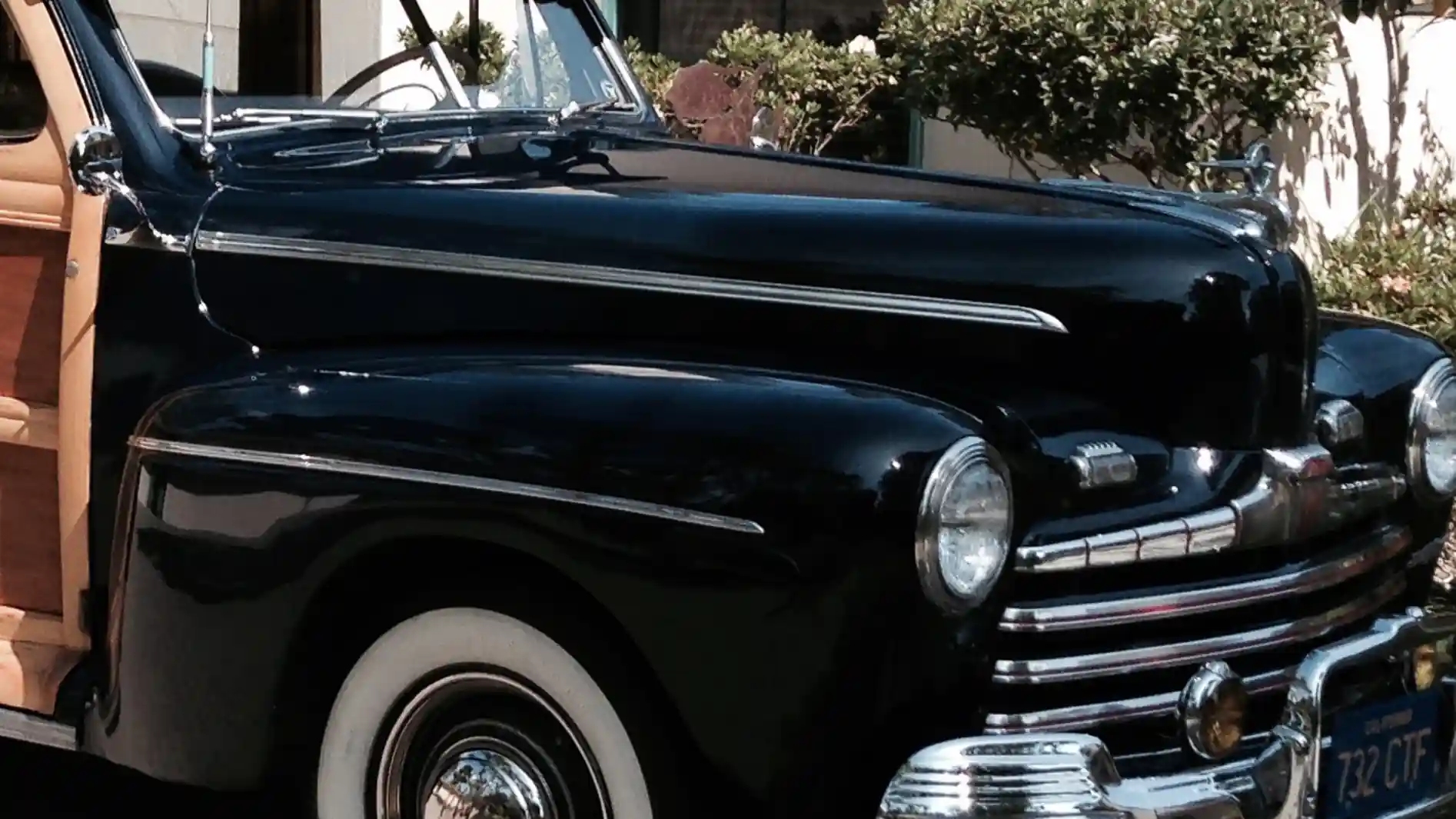
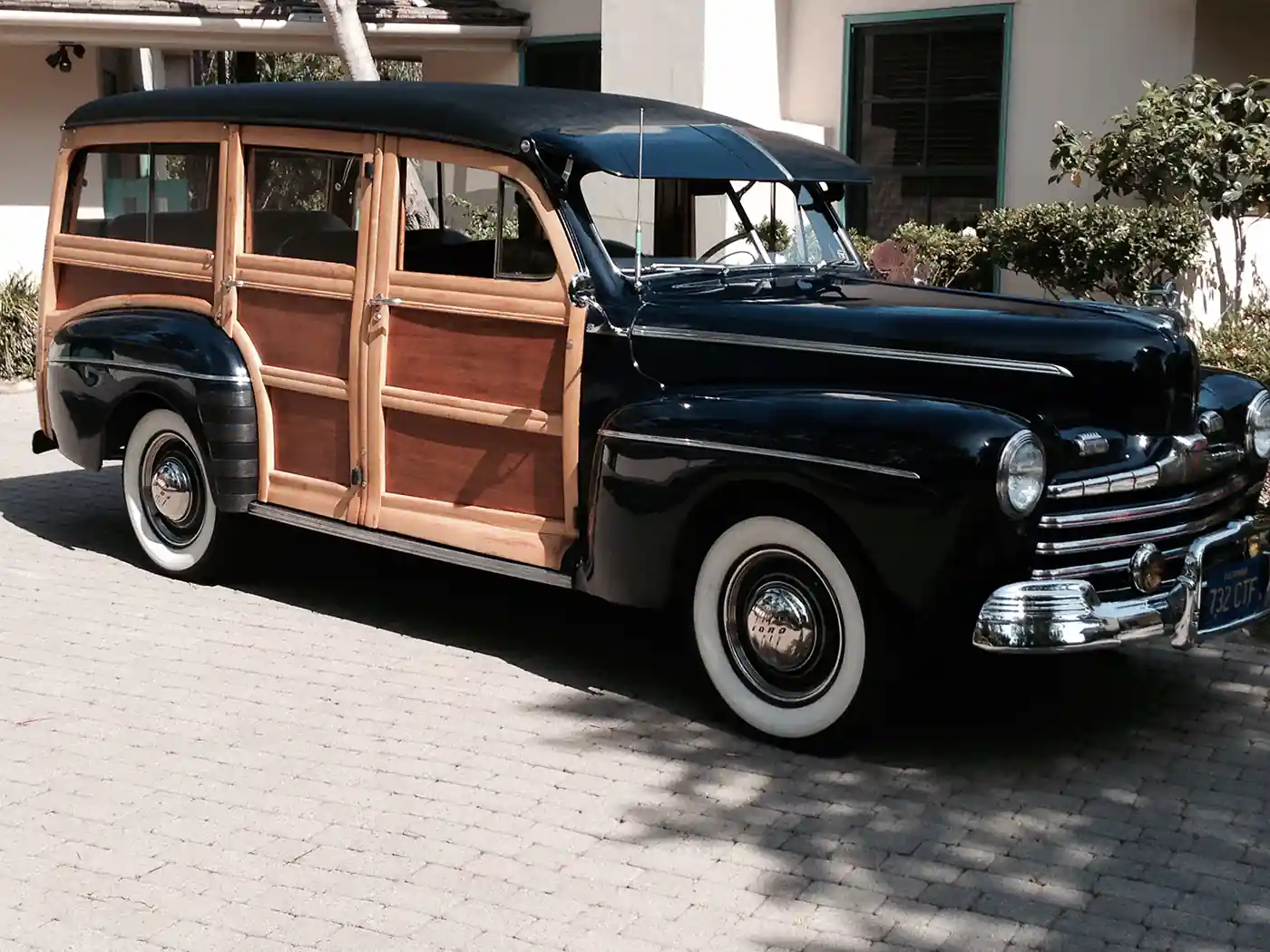
- Manufacturer: Ford Motor Company
- Model: 99A
- Year: 1946
- Exterior Color: Black with wooden panels
- Interior Color: Black
The 1946 Ford Woody Wagon is a classic example of post-World War II American automotive design, blending functionality with a distinctive aesthetic. Here are some key details about this iconic vehicle:
Design and Styling
- Body Style: The 1946 Ford Woody Wagon is a station wagon known for its distinctive wooden body panels. This design gave the car its “woody” nickname and made it a popular choice among families and outdoor enthusiasts.
- Exterior: The exterior features a combination of steel and genuine wood, usually maple or birch for the framing and mahogany for the panels. The front end retains the classic Ford design with a prominent grille and rounded headlamps, while the wooden body panels add a unique and rustic charm.
- Interior: The interior of the Woody Wagon is spacious, designed to accommodate up to eight passengers. It features bench seating in the front and middle rows, with a foldable rear seat for additional cargo space. The interior materials are durable, reflecting the car’s practical use, but also include stylish touches such as wood trim that matches the exterior.
Performance
- Engine: The 1946 Ford Woody Wagon was equipped with a 239 cubic inch (3.9-liter) Flathead V8 engine, producing around 100 horsepower. This engine was known for its reliability and provided sufficient power for both city and highway driving.
- Transmission: The car came with a 3-speed manual transmission, which was standard for vehicles of that era. It offered a straightforward and engaging driving experience.
- Suspension: The suspension system included a solid front axle with a transverse leaf spring and a similar setup at the rear, providing a stable and comfortable ride.
Historical Context - Post-War Production: The 1946 Ford Woody Wagon was among the first models produced by Ford after World War II. The automotive industry was transitioning from wartime production back to civilian vehicles, and the Woody Wagon became a symbol of post-war prosperity and the renewed focus on family and leisure activities.
- Popularity: The combination of practical utility and stylish design made the Woody Wagon popular among suburban families, surfers, and outdoor enthusiasts. Its ability to carry multiple passengers and gear made it an ideal choice for trips to the beach, camping, or other recreational activities.
Notable Features
- Wood Construction: The wooden body panels were both a stylistic and functional feature. They required regular maintenance to protect against weathering and damage but provided a distinctive and charming appearance.
- Spacious Interior: The roomy interior and flexible seating arrangements made the Woody Wagon versatile for both passenger transport and cargo hauling.
- Classic Design Elements: The car retained many classic Ford design elements, including the prominent grille, chrome accents, and rounded fenders, which contributed to its timeless appeal.
Legacy
- Collector’s Item: Today, the 1946 Ford Woody Wagon is a highly sought-after collector’s item. Its unique blend of wood and steel, combined with its historical significance, makes it a prized addition to any classic car collection.
- Restoration and Preservation: Many of these vehicles have been meticulously restored, with attention to preserving the original wooden panels and other period-correct details. Restorations often involve sourcing or fabricating wood components, as well as maintaining the mechanical aspects of the car.
The 1946 Ford Woody Wagon remains an enduring symbol of post-war American automotive culture, celebrated for its distinctive design, practical utility, and nostalgic charm. It continues to captivate car enthusiasts and collectors with its unique blend of style and functionality.