
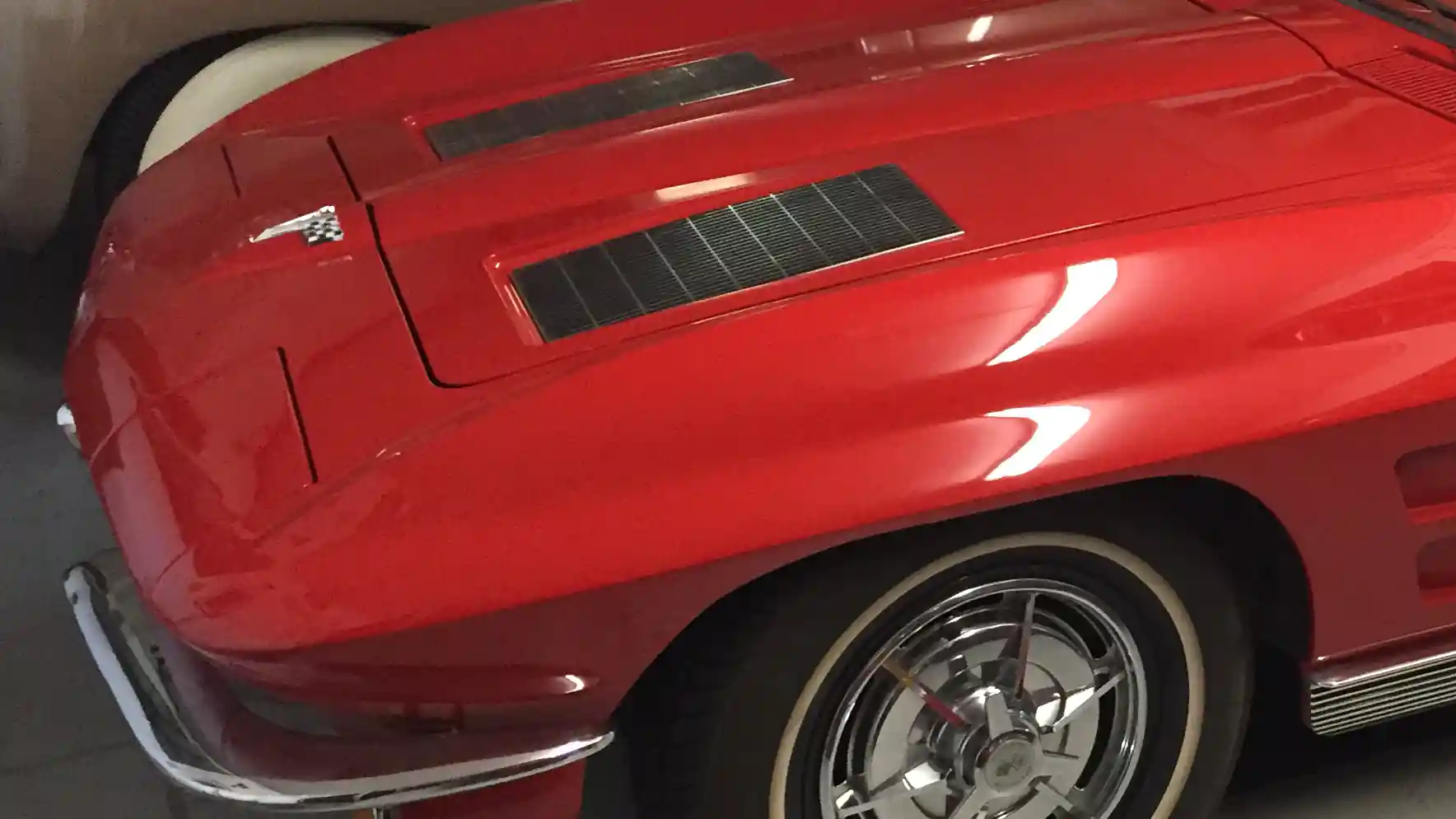
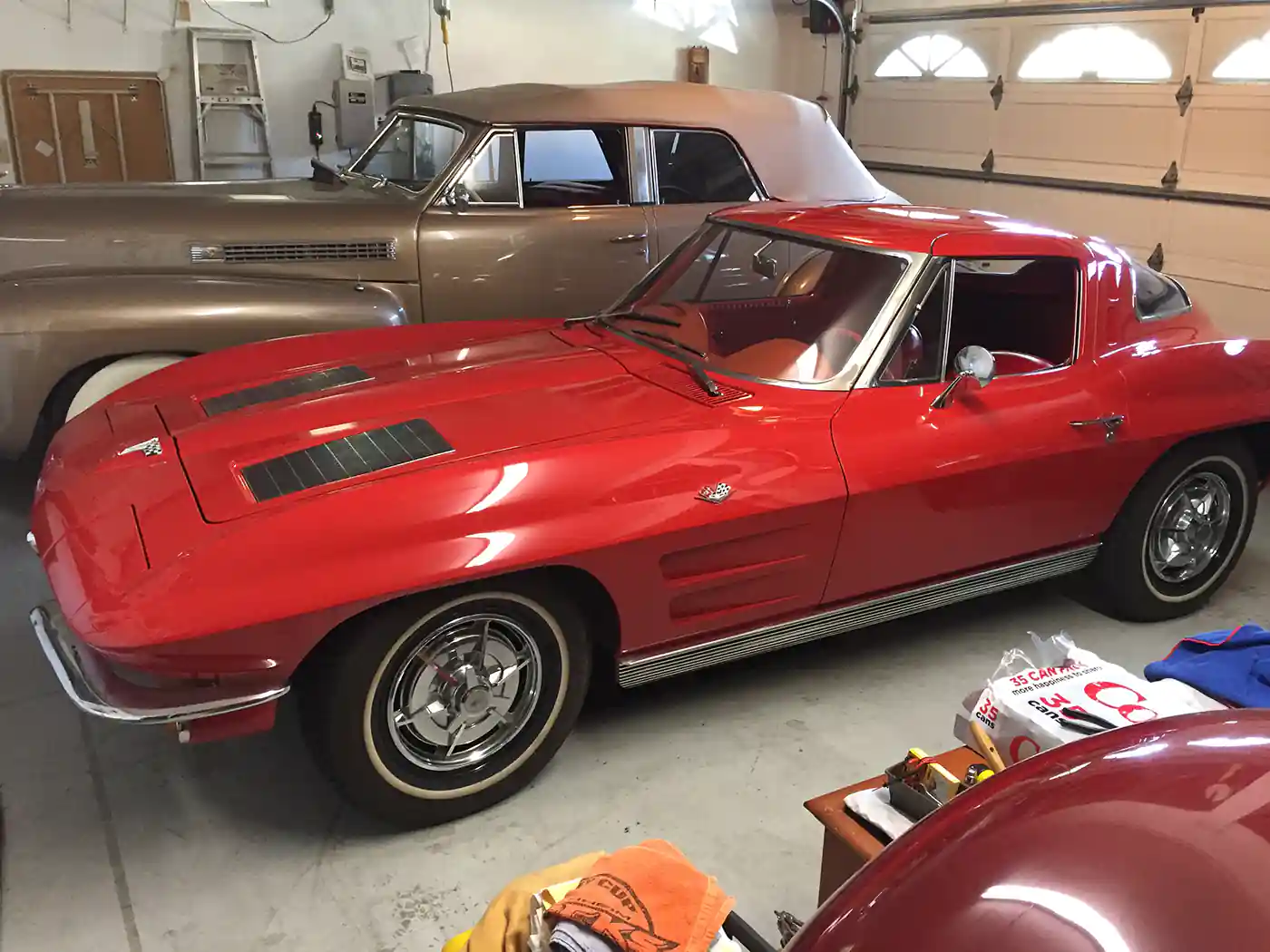
- Manufacturer: Chevrolet (General Motors)
- Model: C2 A.K.A. “Sting Ray”
- Year: 1963
- Exterior Color: Riverside Red
- Interior Color: Red
The 1963 Chevrolet Corvette Sting Ray, particularly the split-window coupe, is one of the most iconic and sought-after American sports cars. Here’s a detailed overview:
Design and Styling
- Body Style: The 1963 Corvette Sting Ray introduced a dramatic new design with a fastback coupe body style, featuring a distinctive split rear window. This split window is a unique feature found only on the 1963 model.
- Exterior: The car’s exterior is marked by its sharp, angular lines, hidden headlamps, and a pronounced “sting ray” shape. The body was constructed with fiberglass, which was lightweight and durable. The split rear window, a design by Larry Shinoda under the guidance of Bill Mitchell, provided a striking aesthetic but limited rear visibility.
- Interior: Inside, the Corvette offered a driver-focused cockpit with bucket seats, a sporty steering wheel, and a comprehensive instrument panel. The interior was designed to combine comfort with the feel of a high-performance sports car.
Performance - Engine Options: The 1963 Corvette came with several engine options:
A base 327 cubic inch (5.4-liter) V8 engine producing 250 horsepower.
Upgraded versions of the 327 V8 were available, delivering 300, 340, or 360 horsepower, with the latter equipped with Rochester fuel injection. - Transmission: Buyers could choose between a 3-speed manual, 4-speed manual, or a 2-speed Powerglide automatic transmission.
Suspension: The 1963 model featured an independent rear suspension, a first for the Corvette, significantly improving handling and ride quality.
Historical Context
- Revolutionary Design: The 1963 Corvette Sting Ray was a major departure from the previous generation, showcasing a more aggressive and modern design. It was also the first year for the Sting Ray name.
- Production: Approximately 21,513 Corvettes were produced in 1963, with around half being the split-window coupes. This unique feature was discontinued after just one year due to visibility concerns and mixed reactions, making the 1963 model highly collectible.
Notable Features
- Split Rear Window: The split rear window is the most distinctive feature of the 1963 Corvette, making it instantly recognizable and highly coveted among collectors.
- Hidden Headlights: The 1963 Corvette introduced hidden pop-up headlights, which became a signature feature of the Corvette for many years.
Independent Rear Suspension: The new suspension system greatly improved handling, making the 1963 Corvette a much more capable performance car.
Legacy
- Collector’s Item: The 1963 Corvette split-window coupe is one of the most collectible Corvettes. Its unique design, limited production, and performance capabilities make it a prized possession for car enthusiasts and collectors.
- Cultural Icon: The 1963 Corvette has appeared in numerous films, TV shows, and automotive exhibitions, cementing its status as an American automotive icon.
- Influence on Future Models: The design and engineering innovations introduced with the 1963 Corvette set the stage for future generations of Corvettes, establishing a legacy of performance and style.
The 1963 Corvette split-window coupe remains an enduring symbol of 1960s American automotive design, celebrated for its groundbreaking aesthetics, advanced engineering, and the thrilling driving experience it offers.